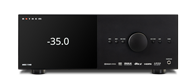
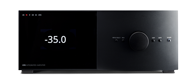
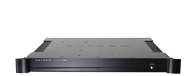
TRANSPORT 3 CD Turntable &
PROCESSOR 3 Digital Processor


For the seventeen years since compact disc's introduction, dedicated high-end designers have striven to extract more and more music from the CD format. The effort has paid off; today's digital products sound vastly better that those of even five years ago, and at much lower prices. But as digital technology has improved, designers have encountered a "brick wall" that limits the ultimate sound quality from digital playback.

That brickwall is jitter, or timing errors in the digital-to-analog conversion process. The primary source of jitter is the digital interface between a processor and transport. Designers are faced with two choices: 1) create a one-box CD player with no need for an interface, or 2) accept the jitter problem and design separates. Each solution involves technical tradeoffs that influence sound quality.

Rather than be skewered on the horns of this dilemma, some designers have created special interfaces that allow the digital front-end to occupy two chassis, yet not introduce jitter in the interface (Spectral's Spectralink is an example). Unfortunately, these interfaces are proprietary, meaning that you must use a transport and processor from the same company to take advantage of the custom interface. What the world needs is a high-performance digital interface used by many manufacturers at all price levels.

Enter the new Processor 3 and CD Transport 3 from Sonic Frontiers. This processor/transport pair sports a new low-jitter interface that may become available on a wide range of products. This new interface, called I2S Enhanced (pronounced "I squared S"), was developed by UltraAnalog, which provides it free of charge to any manufacturer. The idea is for many high-end companies to offer the interface so that consumers can mix and match products and still have a low-jitter interface.

After auditioning a number of high-end digital front-ends, I'm increasingly of the opinion that state-of-the-art digital play-back requires a special interface, or a single-box approach such as the Krell KPS-25s reviewed in last month's Fi. Listening to the Processor 3 and Transport 3 supports this view. The Transport 3 features a futuristic loading mechanism in which an "iris" closes to cover the disc well of the top-loading transport. Pressing the "Open" button causes the five blades of the iris to retract, revealing the disc well and small disc clamp. If you've seen the opening credits of James Bond movies, you know what the Transport 3's loading mechanism looks like.

All the transport controls are located on the top panel, leaving the slim front panel with only the power on/off button and green display. The all, metal remote control is a disc that fits neatly into the palm of the hand. No transport-control button is more than a thumb-stretch away, Two niceties add to the remote's appeal: a rubber ring inset into the bottom protects table tops, and dual IR emitters allow the remote to work when pointed in almost any direction. This is one of the best-designed remote controls I've used. Digital outputs include coaxial on an RCA jack, coaxial on BNC, AES/EBU, ST-Type optical, TosLink, and I2S Enhanced. This output array should accommodate any digital processor.

Inside, the Transport 3 uses a Philips CDM-12i transport mechanism (the same device found in the Mark Levinson No. 31.5). This mechanism isn't as sturdily built as the mechanisms in two other products I've recently reviewed: the modified Esoteric mechanism in the Spectral SDR-3000, and the JVC transport in the Krell KPS-25s. Nonetheless, the CDM-12i has proved itself sonically in the superb No. 31.5.

Most of the Transport 3's substantial weight comes from the thick metalwork and large power supply. The Transport 3 features the most deluxe metalwork found on a Sonic Frontiers product to date. The chassis top deck is machined from 1" -thick aluminum stock, although the lower chassis is conventional bent steel. The power supply uses separate potted power transformers and twelve power supply regulation stages.

At $6999, the Transport 3 starts to enter the price realm of the Levinson No. 31.5 ($8450) and Spectral SDR-3000 ($7995), the two best transports I've auditioned.

The Processor 3 is a direct descendent of Sonic Frontiers' excellent SFD-2 processor. The new unit, however, is more ambitious, with a separate power supply, a new tubed output stage, and other circuit refinements. The power supply is contained in a separate chassis nearly half the size of the processor itself. A large umbilical cable connects the two chassis.

The Processor 3's streamlined front panel has six buttons for direct selection of digital input. A display shows the sampling frequency, the input selected (coaxial, optical, etc.), and whether the unit is locked to a digital source. Balanced outputs are provided on XLR jacks, unbalanced on RCA's. Digital inputs include one of everything: coaxial, TosLink, ST-Type optical, AES/EBU, and BNC. The sixth input is the large, computer-looking I2S Enhanced interface. The multiple digital inputs and front-panel input switching make evaluating I2S Enhanced straightforward.

Sonic Frontiers bills the Processor 3 as being "future proof," which is the buzz word in these uncertain digital times. Specifically, the Processor 3 has somewhat modular construction; the input receiver, input switching electronics, and digital filter are on one board, the DACs are on a second board, and the tubed analog output stage on a third board. To adapt the Processor 3 to new technology, the input board would need replacingÑat a minimum. You could keep the power supply, its chassis, the processor chassis (with its input and output jacks), and analog output stage. Conceivable, the DAC board could stay with a 96 kHz input signal: the UltraAnalog DACs already operate at 8-x 44.1 kHz, or 352.8 kHz. This is about the same frequency as driving them with a 4-x oversampling digital filter at 96 kHz. The analog output filter is designed for 40 kHz bandwidth and the size would provide the extended bandwidth advantages of 96 kHz-sampled digital audio. This assumes, of course, that your tweeters are linear beyond 20 kHz. The front-panel display can indicate sampling frequencies of 88.2 kHz and 96 kHz, if one of those frequencies becomes available to consumers.

I got a feel for the Processor 3's modular construction when I did a little surgery on two units. The first review sample produced a noise when connected with the I2S Enhanced interface. This glitch was reportedly corrected after only a few units were made (I received one of the first production units). The replacement Processor 3 had 6 dB too little gain in one channel, which was likely a fault of the DAC board. I put the first sample's DAC board in the second unit and ended up with one that worked fine for the rest of the review period. The entire job took less than ten minutes.

The Processor 3 uses top-grade parts throughout: UltraAnalog AES21 low-jitter input receiver, Pacific Microsonics PMD100 HDCD decoder/filter, and dual UltraAnalog DACs per channel. Rather than create a balanced signal in the analog domain after the DACs with a sonically-degrading phase splitter (a circuit that makes a balanced signal from an unbalanced one), the Processor 3 is truly balanced. The digital data-stream is converted to balanced before the DACS, then converted to analog with four DACS, four current-to-voltage converters, and four analog output stages (+left, -left, +right, -right). This technique is much more expensive, but is better sonically and technically.

The current-to-voltage converters are a new custom circuit housed in separate potted modules. This stage had been an op-amp built into the UltraAnalog DAC in the SFD-2. The DACs and current-to-voltage converters are mounted on a Teflon hybrid circuit board.

A pair of 6922 dual triodes (per channel) form the analog output stage. Parallel output tubes lower the output impedance compared with the SFD-2's single tube per channel. This allows the Processor 3 to drive longer cable runs into lower input-impedance preamps, and also makes the bass tighter. In addition, the big output coupling capacitors have been replaced by a DC servo, another refinement that should improve the bottom-end tautness and dynamics. High-quality film capacitors and metal film resistors are used throughout. The power supply features a single toroidal transformer with seven secondary windings. The separate power supply provides regulated DC to the processor through an umbilical cord; additional cascaded regulation stages inside the processor further improve the DC. The tubes are fed from a discrete (separate transistor) constant-current source supply.

I auditioned the Processor 3 and Transport 3 combination in two very different systems; Genesis 200s driven by Audio Research Reference 600s; and Aerial 7Bs driven by a Krell KAV-300i integrated amplifier (an outstanding value at $2495). My listening impressions were consistent in both systems. Starting with the Processor 3, this new Sonic Frontiers converter is a significant improvement over the excellent SFD-2 Mk.II. The bass is much better defined, with more bottom-end extension and less midbass ripeness. The Processor 3 still has a touch of warmth and fullness in the mid and upper bass, which I happened to like, and which complemented the Genesis 200s. Although slightly on the warm side, the bass had excellent pitch articulation and agility, particularly when compared with its predecessor. The Processor 3 didn't have the bass depth, solidity, articulation, or dynamics of the Krell KPS-25s, but I didn't expect that it would given the disparity of the two designs.

Where the Processor 3 excels, however, is in the midrange and treble. The mids were beautifully rendered, with ease, liquidity, and lack of grain. Vocals had a wonderful tangibility without sounding forward or pushy. Listen, for example, to Sonny Boy Williamson on the first track of the Fi/Analog Productions Blues, Pop, and Jazz Sampler; his voice had an immediacy that brought him to life. In fact, all vocals were well served by the Processor 3's natural midrange; they had a distinctly human, rather than synthetic, quality that I found musically expressive.

I was also impressed by the Processor 3s rendering of timbre. The woodwinds and horns on the stunning recording of Pictures at an Exhibition (Eiji Oue conducting the Minnesota Orchestra on the Reference Recording label) had a truth in timbre rarely heard in digital. The sound was liquid and smooth, yet not overly soft or lacking resolution. The mark of a truly great digital playback component is the ability to be highly resolving of inner musical detail without sounding etched or analytical. The Processor 3 is, in this regard, among the best I've heard.

Soundstaging was also first rate; the Processor 3 was expansive, with wonderful depth and layering. The impression of air between the layers of depth made the music more natural and involving. A recording that highlighted both the Processor 3's timbral liquidity and precise spatial presentation was A Meeting by the River on Water Lily Acoustics. Ry Cooder and V.M. Bhatt's instruments were enveloped in a gentle reverberation, and the percussion had pin-point precision behind and between Cooder and Bhatt.

I next compared the Transport 3 to the Mark Levinson No. 31.5, both through a coaxial cable driving the Processor 3. Although the Levinson is more expensive than the Sonic Frontiers, they both compete in the same arena. The Sonic Frontiers machine sounded brighter, more forward, and didn't have the Levinson's ease. The Transport 3 tended to emphasize upper harmonics, vocal sibilance, and the sheen of violin rather than the instrument's body. The Transport also tended to overlay the treble with a bit of hash compared with the Levinson's silky smoothness. Moreover, the Levinson better portrayed low-level detail, and was able to resolve quiet instruments in the presence of louder ones.

The Transport 3's midbass was a little fuller and warmer than the Levinson's, but not quite as tight and detailed. The No. 31.5 had deeper extension, and a bit more solidity in the extreme bottom end. I also heard tighter image focus and more bloom through the No. 31.5. Frankly, the No. 31.5 was in another league.

Performing this comparison with the Transport 3 driving the Processor 3 through the I2S Enhanced interface (and still using coax on the Levinson) made the two transports sound much more similar. The Transport 3 was still brighter and more immediate, although the sense of space and low-level resolution greatly increased to the point of equaling that heard from the No. 31.5.

Continuing this comparison of Sonic Frontiers pair through a conventional interface (an Aural Symphonics coaxial cable) and the I2S Enhanced, I found that the I2S Enhanced produced a larger overall presentation size, with tighter image focus. Image outlines became sharper, and the sense of air around those images was more palpable and natural. The low-jitter interface brought everything into sharp focus. More-over, reverberation and bloom no longer sounded fused with images; the I2S Enhanced interface rendered a more natural impression of instruments existing in an acoustic space. The improvement with I2S Enhanced was not quite to the same degree heard by using the Spectralink interface between the Spectral SDR-2000 processor and SDR-3000 transport, but it was still considerable. This isn't a difference you need to go back and forth several times to hear, but one that is immediately apparent.

I should note that the Processor 3 and Transport 3 use the less sophisticated "Level 2" of the I2S Enhanced interface; Sonic Frontiers claims no improvement in jitter performance was realized with a Level I implementation. In Level 2, the clock is in the transport; in Level 1, the clock is in the processor. To sum up, the Processor 3 is a world-class digital processor that is made all the more attractive by its $6999 price. The midrange liquidity, rendering of timbre, and lack of grain were all first-rate. The $8995 Spectral SDR-2000 was cleaner still, but the Processor 3 had more warmth through the upper bass and midband. While seven grand is a significant investment, the Processor 3 offers very high value when compared with other top-tier digital converters.

I was less enamored of the Transport 3. I thought its performance through coaxial and AES/EBU interfaces was a notch below that of the Spectral SDR-3000 ($7995), the Mark Levinson No. 31.5, and the transport section of the Krell KPS-25s ($20,000). The Sonic Frontiers lacked the smoothness, ease, and openness of these other products. If you plan to use the Transport 3 with products lacking the I2S Enhanced input, I recommend you carefully audition it in your system before purchase.

But when connected to the Processor 3 through the I2S Enhanced interface, the Transport 3 was competitive in many ways with any transport I've heard. Because the I2S Enhanced interface confers such a large advantage, I recommend the Transport 3 for those listeners who will use the two Sonic Frontiers products together.

FI SPEC SHEET
Manufacturer
Sonic Frontiers
3535 Laird Road, Unit #16
Mississauga, Ontario
Canada L5L 5Y7
Phone:(905) 828-4575
Fax: (905) 828-4585
www.sonicfrontiers.com
Number of years in business: 10
Number of dealers: 100

Product Type
Top-loading, single-disc, solid-state CD transport
Price: $6999
Warranty: Five years parts and labor,
one year on tubes
Dimensions:19.1 25" W x 4" H x 16" D
Weight: 31.5 lbs. net

Product Type
Digital processor with vacuum tube output stage
Price: $6999
Warranty: Five years parts and labor, one year on tubes
Dimensions: 1 9" W x 4.5" H x 14.25" D (processor); 9" W x 4" H x 1 3" D (power supply)

Features
Balanced and unbalanced outputs, modular construction
for upgradability
HDCD decoding?: Yes
Inputs: One each coaxial on ROA, coaxial on BNC,
AES/EBU, TosLink optical, ST-Type optical, I2S Enhanced input
Outputs: Balanced on XLR jacks, unbalanced on RCA jacks, coaxial digital output
Conversion: Dual UltraAnalog 20-bit DACs per channel
Filter. Pacific Microsonics PMD100 8-X oversampling
Manufacturer's Specifications
Output level: 6 VRMS balanced, 3 VRMS unbalanced
Output impedances 125 ohms

System
Power Amplifiers: Audio Research Reference 600,
Krell KAV-300i
Preamplifier: Audio Research Reference One, Krell KAV-300i
Loudspeakers: Genesis 200, Aerial 7B
Interconnects: MIT MI-350, AudioQuest Diamond,
Straightwire Rhapsody
Loudspeaker cable: MIT Reference 850,
Straightwire Rhapsody 11 bi-wire

Features
Remote control
Outputs: One each coaxial on ROA, coaxial on
BNC, AES/EBU, TosLink optical, ST-Type optical,
I2S Enhanced output

Accessories
MIT Z-Stabilizer 11, MIT Z-Center, MIT Z-Isolator HC,
MIT Z-Cord 11 Billy Bags 5500 equipment rack ASC
Tower Stouts, Tower Slims, and 16" Full-Round Tube Traps

Fl Component in a Nutshell
Build Quality: Excellent (both products)
Overall Convenience of Use: Good (both products)
Compatibility: The Processor 3's neutral tonal balance will suit a wide
variety of systems. The Transport 3's brightish rendering suggests it will
work best with the Processor 3 through I2S Enhanced (which mitigates most of
the brightness), or with systems on the warm side of the spectrum.
Incompatibility:(see above)
Sonic Frontiers: The Company

A Canadian university student by the name of Chris Johnson had a life-changing musical experience back in 1988. While working at a hi-fi store, he heard a system packed with exotic components that had been built entirely by handÑturntable, arm, electrostatic speakers, tubed amps Ñ by the store's technician. The sound was far better than anything sold in the store. Johnson was so impressed he commissioned the technician to build a preamplifier for Johnson's own use. Figuring many other do-it-yourself audiophiles would like to build their own products, Johnson searched the world for the best parts money could buy and started a mail order company to sell components to like-minded audiophiles.

The catalog was such a success that this fledgling company, now called Sonic Frontiers, began selling amplifier kits. By 1991, Johnson took on a partner, Chris Jensen, and started manufacturing complete audio products and selling them through a traditional dealer network, The product that put SF on the map was the SFL-1 line stage preamplifier. This $1395 tubed preamp competed sonically with units costing three times the price, and quickly became an audiophile favorite.

As Sonic Frontiers' products became more up-scale, they launched the Anthem line for entry-level high-end customers. Anthem was designed to introduce the magic of tubed electronics to a wider audience at a price not much higher than that of mass-market solid-state products.

From a 2,000 square foot building and four employees in 1991, Sonic Frontiers now occupies 22,000 square feet, employs 65, and has annual sales of ten million dollars. Sonic Frontiers is unusual in that both principals have degrees in economics and marketing rather than engineering. The company plans to introduce a complete line of solid-state(!) home-theater(!) products this fall.

The Sonic Frontiers Processor 3 and Transport 3 pair reviewed this issue use a new digital interface designed to reduce jitter in separate digital processors and CD transports. In this sidebar, we'll look at what jitter is and why this new digital interface could be a boon to music lovers.

Jitter describes timing inaccuracies in the digital-to-analog conversion process that degrade sound quality. A "clock" in the digital processor controls when the digital samples that represent the music are converted to analog. If this clock isn't perfectly precise, sound quality is degraded. Specifically, the treble gets harder, the soundstage shrinks, and the music takes on a somewhat synthetic character.

Think of the bass drum in a marching band as a D/A-converter clock, and of the band members as the digital bits representing the music. Each row of marching musicians is one audio sample. On each drum beat, the musicians take one step forward in unison. Now consider what would happen if the drummer started to get sloppy, leaving too much time between some beats and not enough time between others. Without a precise timing reference, the distance between each row of musicians would no longer be uniform.

In digital audio reproduction, each clock pulse triggers the conversion of a digital sample to analog form. If these clock pulses aren't perfectly uniform Ñ the very definition of jitter Ñ we hear the timing imprecision as reduced musicality. Jitter causes the samples representing the music to be put back together with slightly staggered spacing, creating distortion in the audio waveform. Just as the marching-band musicians can't step together if the drummer isn't perfectly precise, digital audio samples can't be correctly reconstructed into music if the clock is jittered. To give you an idea of how precise the clock must be, timing errors of as little as 10 picoseconds (0.00000000001 second) Ñ about the time it takes light to travel a tenth of an inch Ñ are audible.

The conventional S/PDIF or AES/EBU interface found on virtually all digital audio separates sets a limit on the processor's jitter performance. Specifically, jitter of less than 100ps is nearly impossible to achieve with a conventional interface. That's why some companies use a proprietary interface, or design CD players that don't need an interface. Unfortunately, these special interfaces aren't compatible with each other, limiting the consumer's choice. What the high-end industry needs is a low-jitter interface that many manufacturers adopt, allowing audiophiles to mix and match components without sacrificing sound quality.

That's exactly what a new interface called I2S Enhanced does. Developed by UltraAnalog and offered to the high-end industry free of charge, I2S Enhanced is a significant improvement over conventional digital interfaces.

The I2S bus was originally developed by Philips as a means of transmitting audio data and clocks between chips within a CD player. Some digital products have offered I2S inputs and outputs on an inexpensive five-pin cable. Although this was an improvement over the S/PDIF interface, the I2S Enhanced interface takes the original I2S specification to a much higher level of performance. The interface is implemented on a so-called 13W3 cable, which was originally designed for the computer industry for transmitting component video and control signals. It consists of three coaxial conductors and five twisted-pair lines bundled in an outer jacket, Two of the coaxial conductors carry the master clock in balanced mode. The twisted-pair lines carry the bit clock, word clock, channel status data, and audio data, respectively. Keeping the clock and audio data separate confers a large advantage in jitter performance.

Two levels of implementation are provided. Level 2 is the basic configuration, in which the clock is generated by the transmitting device (usually a CD transport) and received by the digital processor. This method is far better than a conventional S/PDIF interface, but is not ideal because the clock must still travel down a cable before it becomes the timing reference for the digital-to-analog conversion process.

In Level 1 of the I2S Enhanced interface, the clock is generated in the receiving device (the digital processor) and sent back to the transmitter (the CD transport). This forces the transport to lock to the digital processor, which further reduces jitter.

These levels are compatible with each other That is, a CD transport with a Level 2 I2S Enhanced interface will work with a processor with Level 1 implementation. You won't achieve Level 1 performance, but the system will work automatically without setting switches or telling the products which level you're using. If you upgrade to a Level 1 transport, the interface will automatically recognize the change and provide Level 1 performance.

The I2S Enhanced is an opportunity for the high end to have a truly universal, high-performance digital interface. When one of the high-resolution audio formats becomes a reality, the need for a low-jitter interface will become even more urgent. Let's hope I2S Enhanced becomes the standard for transmitting digital audio.

By ROBERT HARLEY